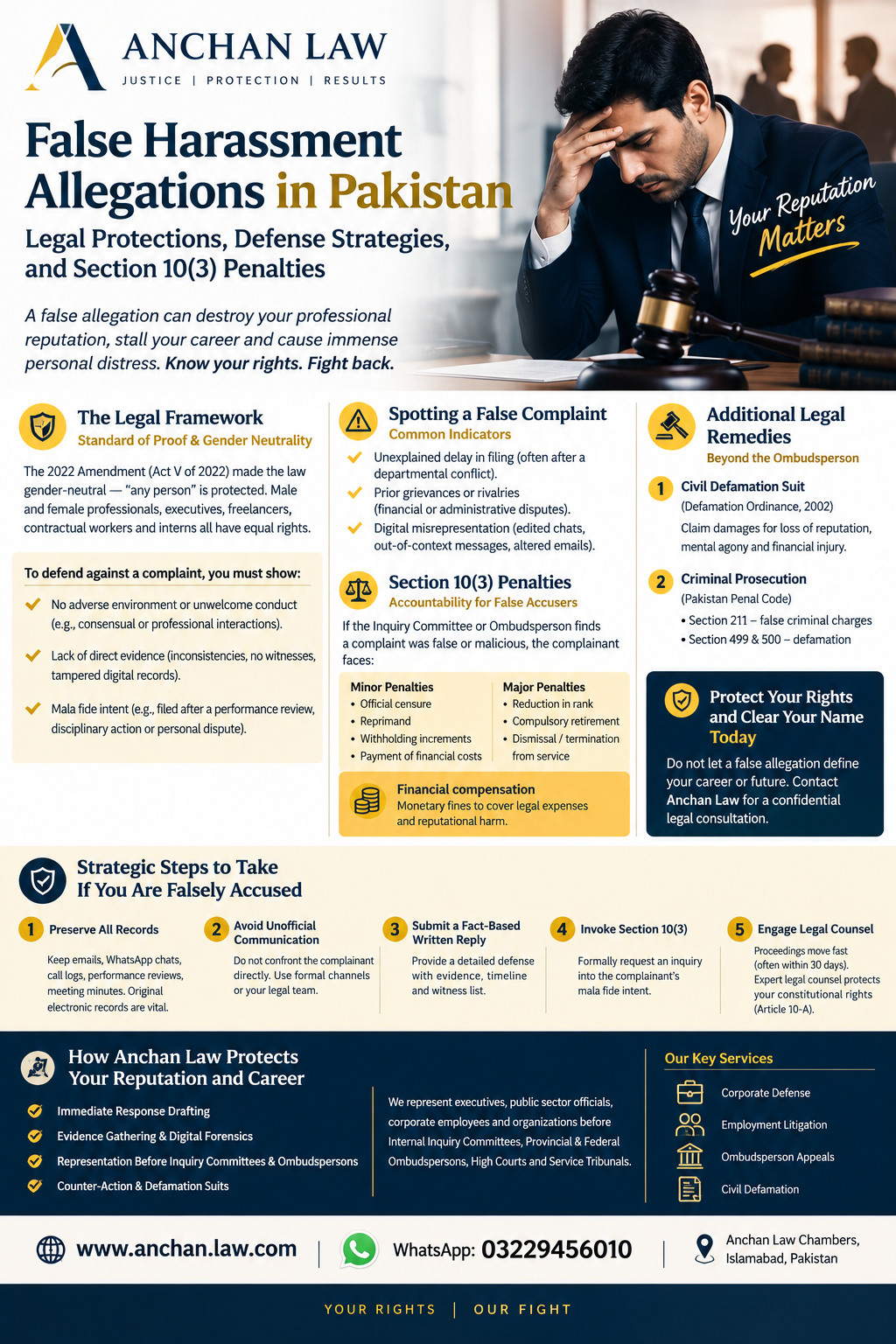
Introduction:
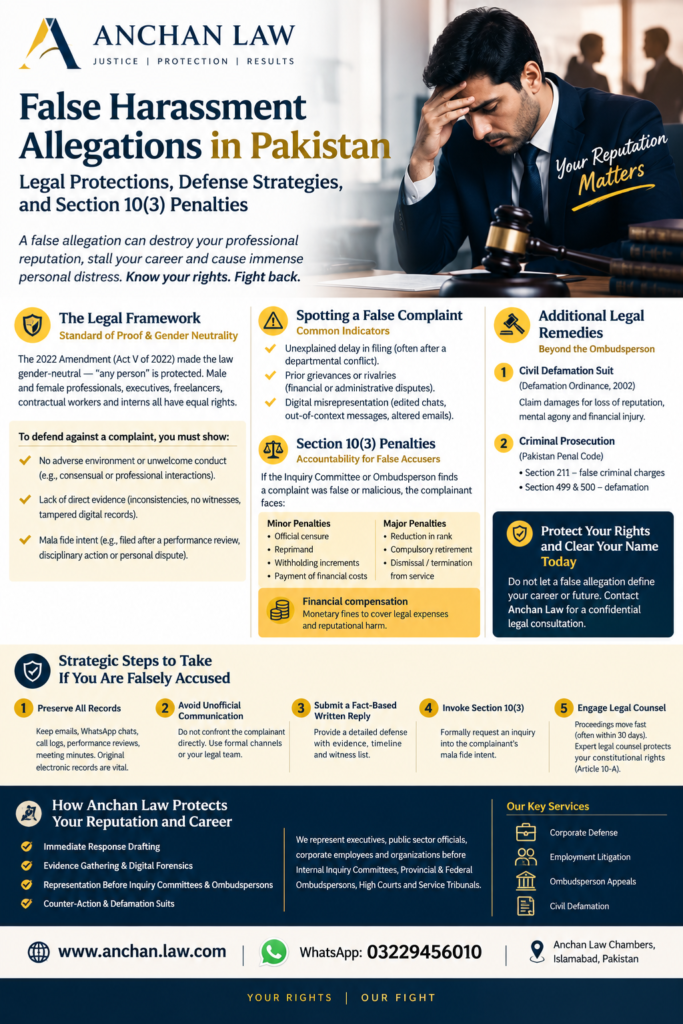
The legal landscape of employment rights in Pakistan faced a major pivot with the recent judgment delivered by the Federal Constitutional Court (FCC). FCC) Workplace Harassment Ruling. Adjudicating on a workplace harassment matter under the Protection against Harassment of Women at the Workplace Act, 2010, the FCC set aside an Islamabad High Court (IHC) verdict and restored an earlier President’s order.
By placing the FCC decision at the very center of analysis, this review unpacks the ruling’s core holdings, its reliance on restrictive statutory thresholds, and why it has triggered an intense national debate within the legal fraternity.
1. Core Holdings of the FCC Workplace Harassment Ruling
The FCC’s legal reasoning hinges on a strict, literal construction of the 2010 Act:
- The “Sexual Nature” Constraint: The FCC) Workplace Harassment Ruling ruled categorically that actionable workplace harassment under the 2010 Act is strictly restricted to conduct which is sexual in nature.
- Exclusion of General Workplace Misconduct: According to the judgment, non-sexual hostility, professional bullying, intimidation, or generalized victimization—regardless of how toxic or demeaning they are—fall outside the legal definition of “harassment” under the 2010 framework.
- Ignoring the 2022 Amendments: A primary point of contention in the wake of the judgment is that the FCC Workplace Harassment Ruling reasoning by passed the crucial 2022 Amendments to the Act, which explicitly expanded the statutory definition to cover gender-based discrimination “which may or may not be sexual in nature”.
2. Juxtaposing the FCC Ruling with Progressive Jurisprudence
To understand the regressive or restrictive nature of the FCC’s position, it must be contrasted against the progressive judicial path carved out over recent years:
A. The Conflict with the Nadia Naz Paradigm and the 2022 Shift
While earlier hyper-literal rulings (such as the Supreme Court’s 2021 Nadia Naz decision) attempted to narrow the scope of the 2010 Act, subsequent legislative reforms (the 2022 Amendments) and later juristic interpretations explicitly sought to correct this flaw by recognizing that institutional and gender-based discrimination is inherently demeaning. The FCC’s current stance represents a reversion to these older, restrictive limitations.
B. Justice Mansoor Ali Shah’s Power-Dynamics Doctrine
The FCC’s insistence on a strict “sexual intent” requirement directly opposes the philosophy laid down by Justice (retd) Syed Mansoor Ali Shah in Muhammad Din’s Case (PLD 2025 SC 354).
- While the FCC treats harassment strictly as a matter of sexual desire, Justice Shah famously held that “sexual harassment is not about sex. It is about power and control.”
- Muhammad Din established that hostile work environments are systemic tools used to subordinate individuals and police workplace hierarchies.
3. The Immediate Backlash and Critique (“The Court That Could Not See”)
The FCC Workplace Harassment Ruling immediate, sharp rebukes from legal scholars and senior jurists—most notably encapsulated in Justice Mansoor Ali Shah’s critical commentary, “The court that could not see”:
- Ignoring the Text and Preamble FCC Workplace Harassment Ruling: The critique notes that the title and preamble of the 2010 Act speak fundamentally of “harassment” anchored in the constitutional right to human dignity (Article 14), rather than restricting the statute solely to explicit sexual acts.
- The Danger of a Safe Barbour for Abusers: Legal analysts point out that by strictly tying harassment to sexual intent, the FCC ruling inadvertently creates a legal loophole, potentially allowing bad-faith actors to escape accountability for severe psychological torture, bullying, and gender-based marginalization as long as they avoid overt sexual overtures. FCC) Workplace Harassment Ruling
- Institutional Blindness: The critique also raised alarm over systemic representation and structural direction, warning that narrow, literal-minded interpretations risk undoing decades of public policy designed to make Pakistan’s workplaces safe and accessible for women.
Conclusion: Where Does the Law Stand?
The FCC’s decision has created a formidable hurdle for complainants seeking redress for non-sexual workplace hostility. By retreating to a rigid, narrow definition of harassment, the judgment forces a confrontation between literal statutory interpretation and the evolving, rights-based protections mandated by the Constitution.
Would you like to focus this analysis more heavily on drafting an appellate review strategy against the FCC ruling, or examine how employer compliance frameworks must adapt to this precedent?