
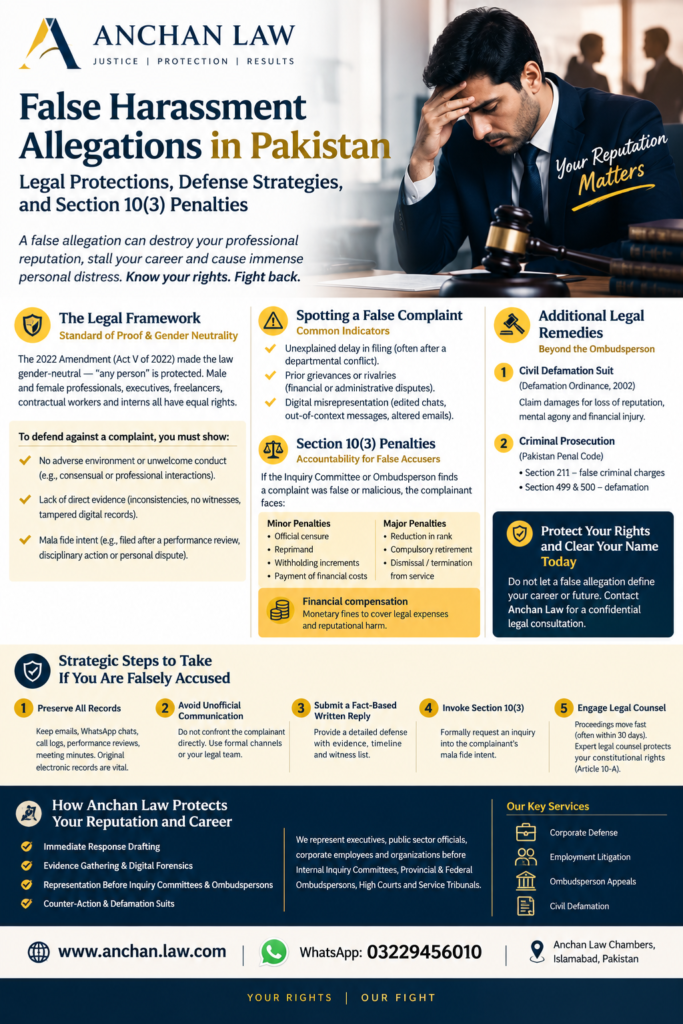
Workplace harassment Law in Pakistan is governed by the Protection Against Harassment of Women at the Workplace Act, 2010, which provides a statutory mechanism for addressing complaints of harassment in professional environments.
The law defines harassment broadly to include:
- Unwelcome sexual advances
- Verbal or physical conduct of a sexual nature
- Discriminatory or hostile work environment
- Retaliation following a complaint
Organizations are legally required to:
- Constitute inquiry committees
- Adopt a code of conduct
- Provide complaint mechanisms
Failure to comply may result in legal consequences for the employer.
Complaint & Inquiry Process
The legal process typically involves: for Harassment Law in Pakistan
- Filing of a written complaint
- Constitution of an inquiry committee
- Recording of evidence and statements
- Findings and recommendations
- Appeal (if required)
Improper handling at any stage may compromise the outcome.
Legal Complexities in Harassment Cases in Harassment Law in Pakistan
These cases involve:
- Sensitive evidence
- Confidentiality concerns
- Power imbalance between parties
- Risk of retaliation
A legally sound approach ensures that:
- Evidence is preserved
- Rights are protected
- Proceedings remain fair
When Legal Intervention Becomes Necessary
Legal support is crucial where:
- The internal process is biased or ineffective
- The complaint is ignored or mishandled
- Retaliation or pressure is applied
- The matter requires escalation
Professional & Confidential Handling
Harassment cases require not only legal expertise but also discretion and sensitivity.
The approach involves:
- Careful documentation
- Strategic complaint drafting
- Representation before inquiry forums
- Legal escalation where required
If You Are Facing Harassment
You are legally protected — but enforcement depends on timely and proper action.
Remaining silent often allows misconduct to continue unchecked.
Seek Confidential Legal Guidance
📩 Share your situation in confidence
📞 Obtain legal advice before initiating proceedings
Your dignity and legal rights must be protected